

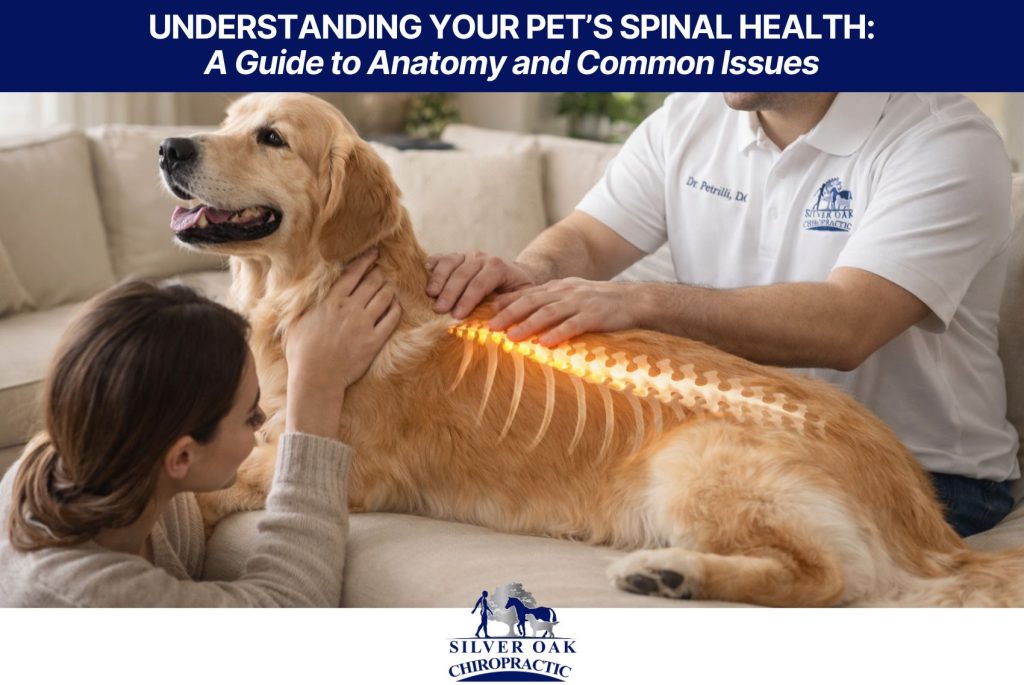
At Silver Oak Chiropractic, we believe that spinal health is just as important for pets as it is for people. Your pet’s spine plays a critical role in movement, balance, nerve communication, and overall quality of life. When spinal function is compromised, it can affect everything from mobility and posture to digestion and behavior.
This guide is designed to help pet owners better understand their pet’s spinal anatomy, recognize common spinal issues, and learn how chiropractic care can support long-term wellness.
Why Your Pet’s Spine Matters
The spine protects the spinal cord, which serves as the main communication pathway between the brain and the rest of the body. Every movement your pet makes—running, jumping, wagging their tail, or even lying down—relies on a healthy spine.
When spinal joints lose proper alignment or mobility, nerve signals can become irritated or disrupted. Over time, this may contribute to pain, stiffness, reduced activity, or changes in behavior.
Maintaining spinal health helps:
- Support proper nerve function
- Improve mobility and flexibility
- Reduce discomfort and inflammation
- Enhance balance and coordination
- Promote overall wellness and longevity
Basic Anatomy of Your Pet’s Spine
Understanding the structure of your pet’s spine can help you recognize why spinal care is so important.
1. Cervical Spine (Neck)
- Located at the top of the spine
- Supports head movement and flexibility
- Commonly affected by pulling on leashes, sudden movements, or trauma
2. Thoracic Spine (Upper and Mid-Back)
- Attached to the rib cage
- Provides stability and protects vital organs
- Often impacted by posture changes or muscle imbalances
3. Lumbar Spine (Lower Back)
- Supports weight-bearing and movement
- Frequently involved in jumping injuries or age-related stiffness
4. Sacrum and Tail
- Connects the spine to the pelvis
- Plays a role in hind limb movement and balance
- Tail movement can reflect spinal and neurological health
Between each vertebra are joints, discs, muscles, ligaments, and nerves—all working together to allow smooth motion and proper communication throughout the body.
Common Spinal Issues in Pets
Pets can experience spinal problems at any age. Some develop suddenly due to injury, while others progress slowly over time.
1. Joint Restrictions (Subluxations)
These occur when spinal joints lose normal motion or alignment, potentially irritating nearby nerves.
Signs may include:
- Stiffness or reduced mobility
- Reluctance to jump, climb stairs, or play
- Changes in posture or gait
2. Degenerative Changes
As pets age, wear and tear can lead to arthritis and decreased spinal flexibility.
Common symptoms:
- Slower movement
- Difficulty standing or lying down
- Sensitivity to touch along the back
3. Disc-Related Issues
Spinal discs act as cushions between vertebrae. When stressed or damaged, they may contribute to discomfort or nerve compression.
Possible signs:
- Back pain
- Weakness in the limbs
- Changes in coordination
4. Muscle Imbalances and Tension
Overuse, poor posture, or compensation from old injuries can create uneven muscle tension along the spine.
How Chiropractic Care Helps Pets
Animal chiropractic care focuses on restoring proper motion and alignment to the spine and joints. Gentle, specific adjustments are designed to:
- Improve spinal mobility
- Reduce nerve irritation
- Support natural healing processes
- Enhance comfort and movement
At Silver Oak Chiropractic, care plans are tailored to your pet’s size, age, condition, and activity level. Chiropractic care is commonly used alongside veterinary care as part of a holistic wellness approach.
Signs Your Pet May Benefit from a Spinal Evaluation
Consider scheduling a chiropractic evaluation if you notice:
- Decreased activity or energy
- Difficulty jumping or climbing stairs
- Limping or uneven gait
- Behavioral changes such as irritability
- Sensitivity when touched along the back or neck
- Declining performance in athletic or working pets
Early care can help prevent minor issues from becoming long-term problems.
Frequently Asked Questions (Q&A)
Q: Is chiropractic care safe for pets?
A: Yes. When performed by a trained professional, animal chiropractic care is gentle, safe, and specifically adapted for pets of all sizes.
Q: Does my pet need a referral from a veterinarian?
A: Requirements vary by state. We are happy to coordinate with your veterinarian to ensure comprehensive care.
Q: How often should my pet receive chiropractic care?
A: Frequency depends on your pet’s condition, age, and lifestyle. Some pets benefit from regular wellness visits, while others may need short-term care for specific concerns.
Q: Can chiropractic care help older pets?
A: Absolutely. Senior pets often benefit from improved mobility, comfort, and quality of life through regular spinal care.
Q: What types of pets can receive chiropractic care?
A: Chiropractic care is commonly used for dogs, cats, and performance animals. Each treatment is customized to the individual animal.
Q: Will my pet be sore after an adjustment?
A: Most pets respond very well. Mild soreness is possible but usually resolves quickly as the body adapts.
Supporting Your Pet’s Long-Term Spinal Health
In addition to chiropractic care, you can support your pet’s spine by:
- Maintaining a healthy weight
- Providing appropriate exercise
- Using supportive bedding
- Avoiding excessive jumping or strain
- Scheduling regular wellness checkups
A proactive approach helps keep your pet active, comfortable, and happy for years to come.
Contact Silver Oak Chiropractic
Silver Oak Chiropractic
📞 Phone: (904) 238-4213
🌐 Website: silveroakchiropractic.com
📅 Book an Appointment >